From the moment you dress into your arctic suit to the last flicker of green and violet across the sky — here is what awaits you in Finnish Lapland.
"Nothing prepares you for the moment it begins. Nothing."
You have seen photographs. Perhaps you have watched videos. But the northern lights exist in a dimension that screens cannot capture — the way they move, the way they fill the sky from horizon to horizon, the way absolute silence surrounds you while something cosmic unfolds above.
Standing beneath the aurora in Finnish Lapland, with snow crunching underfoot and the cold air sharp in your lungs, is one of the most viscerally emotional experiences a human being can have. Guests weep. They laugh. They fall silent. Some propose. Many simply stand with their heads tilted back and say nothing at all.
Our job is to get you to that moment — safely, warmly, beautifully — and then get out of the way so the sky can do what it does.
Book Your NightEvery detail is handled. Every moment is considered. Here is how your evening unfolds.
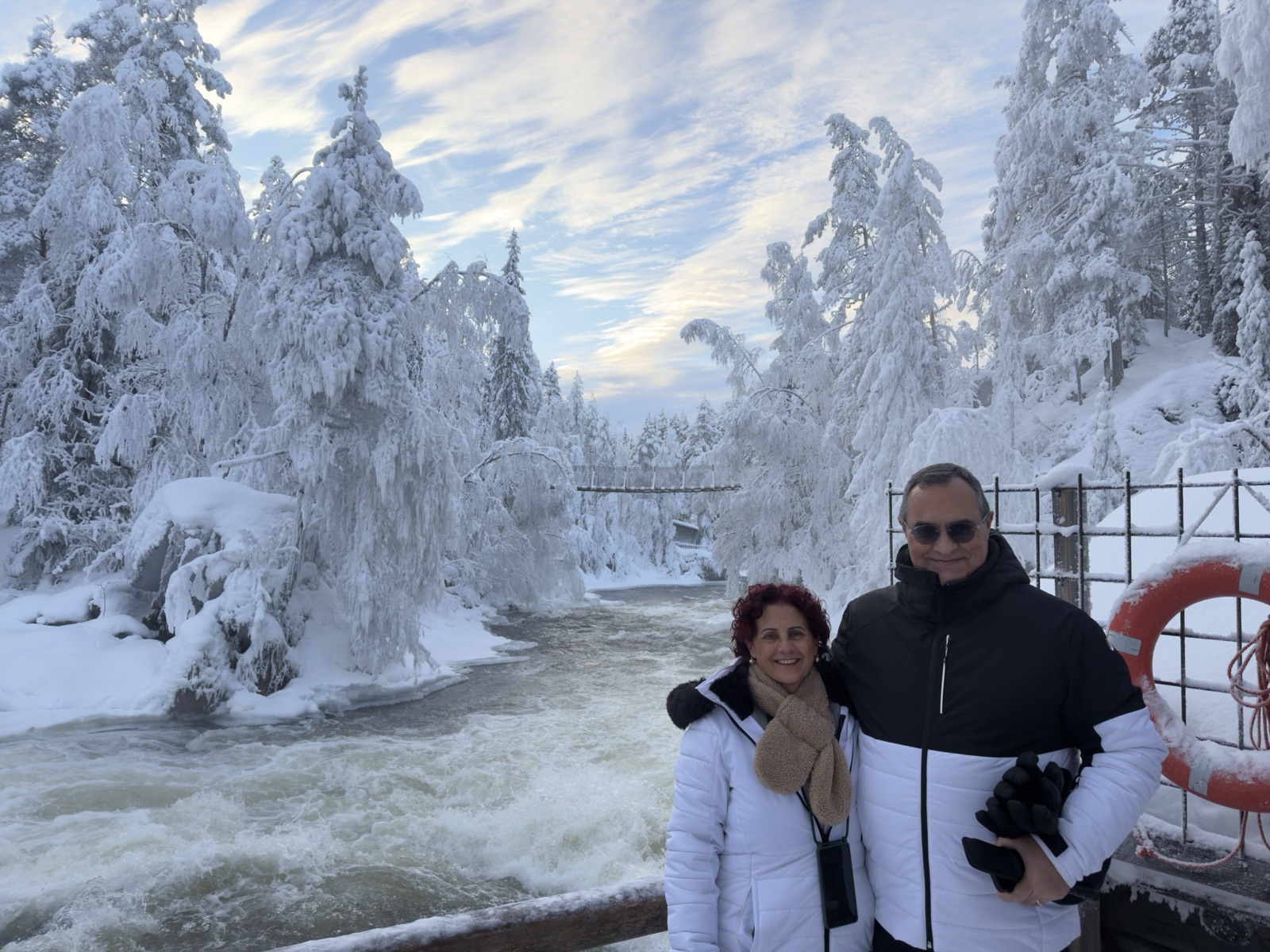
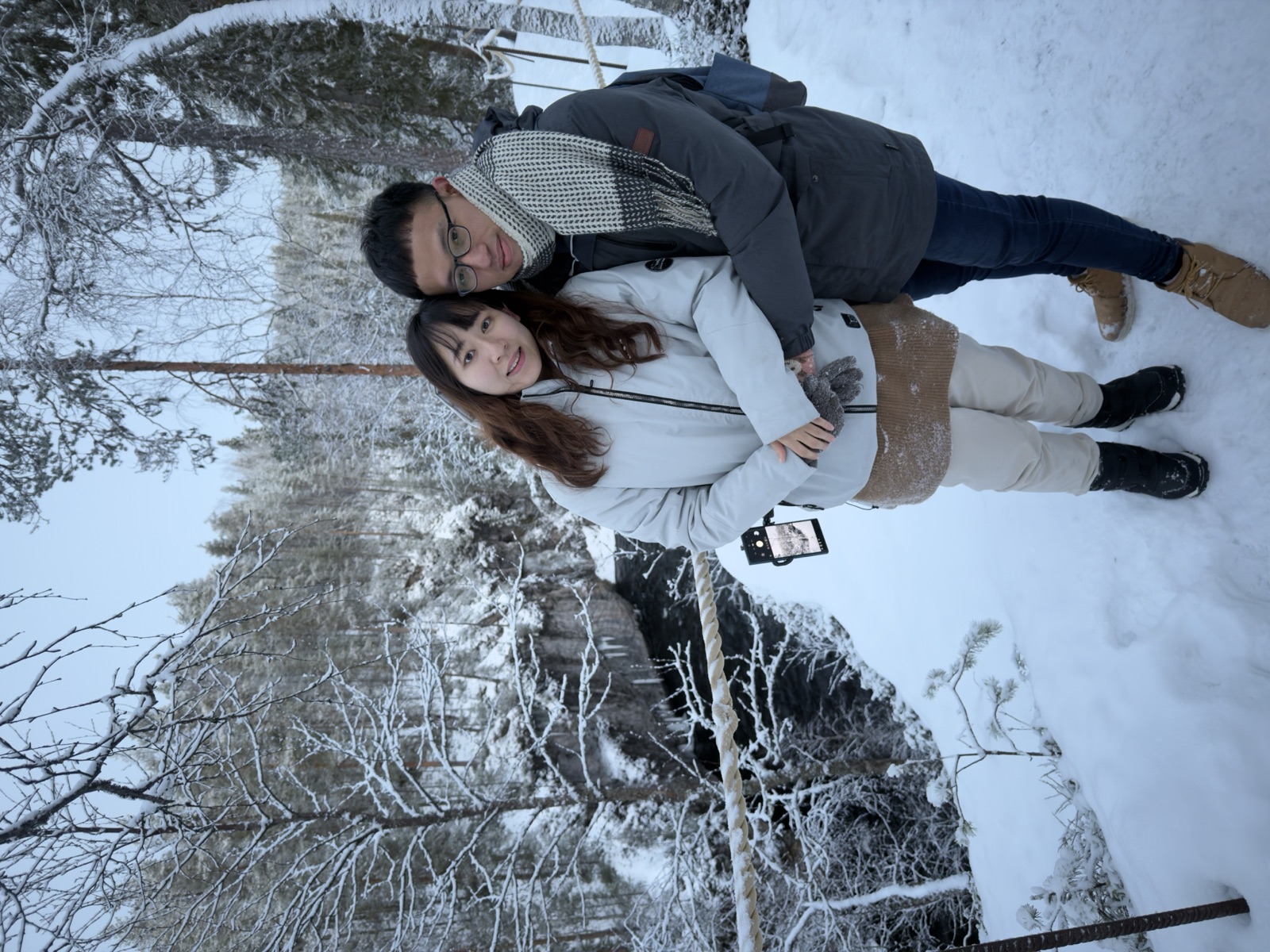
Your guide meets you at the agreed point in Ruka. You are fitted with premium arctic overalls rated to −40°C, waterproof boots, insulated gloves, a balaclava and a hat. The transformation from city clothes to polar explorer takes about 20 minutes — and you will feel the difference the moment you step outside.
Your guide consults real-time KP-index data, NOAA solar wind forecasts and cloud cover satellite imagery to identify the optimal location for tonight. Sometimes that is a lake five minutes away. Sometimes we drive up to 200 km to find clear skies. You will be briefed on exactly where we are going and why.
We arrive at a pre-scouted wilderness location — a frozen lake, an open fell, or a snow-covered clearing deep in old-growth boreal forest. Total darkness. Zero light pollution. The silence of Lapland at night is itself something extraordinary, before a single photon of aurora appears. Your guide sets up tripods and begins camera coaching.
A fire is lit at the lakeside and the warm drinks come out — Finnish coffee, hot berry juice, and sometimes traditional biscuits. The group settles. Eyes adjust to the darkness. Conversation drops to a murmur. And then, almost always when you least expect it, a faint green shimmer appears at the horizon. One person sees it first. Within seconds everyone is pointing.
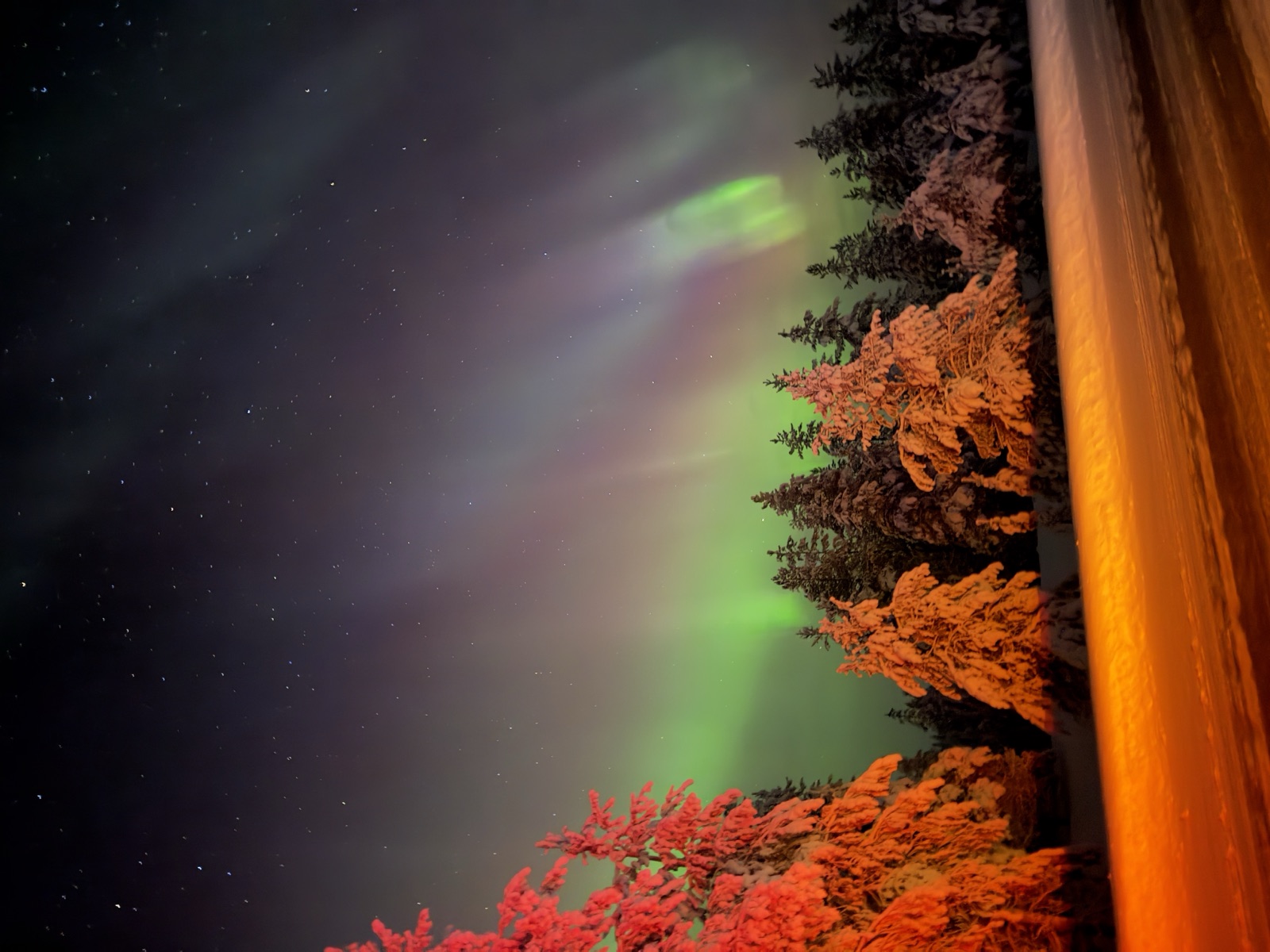
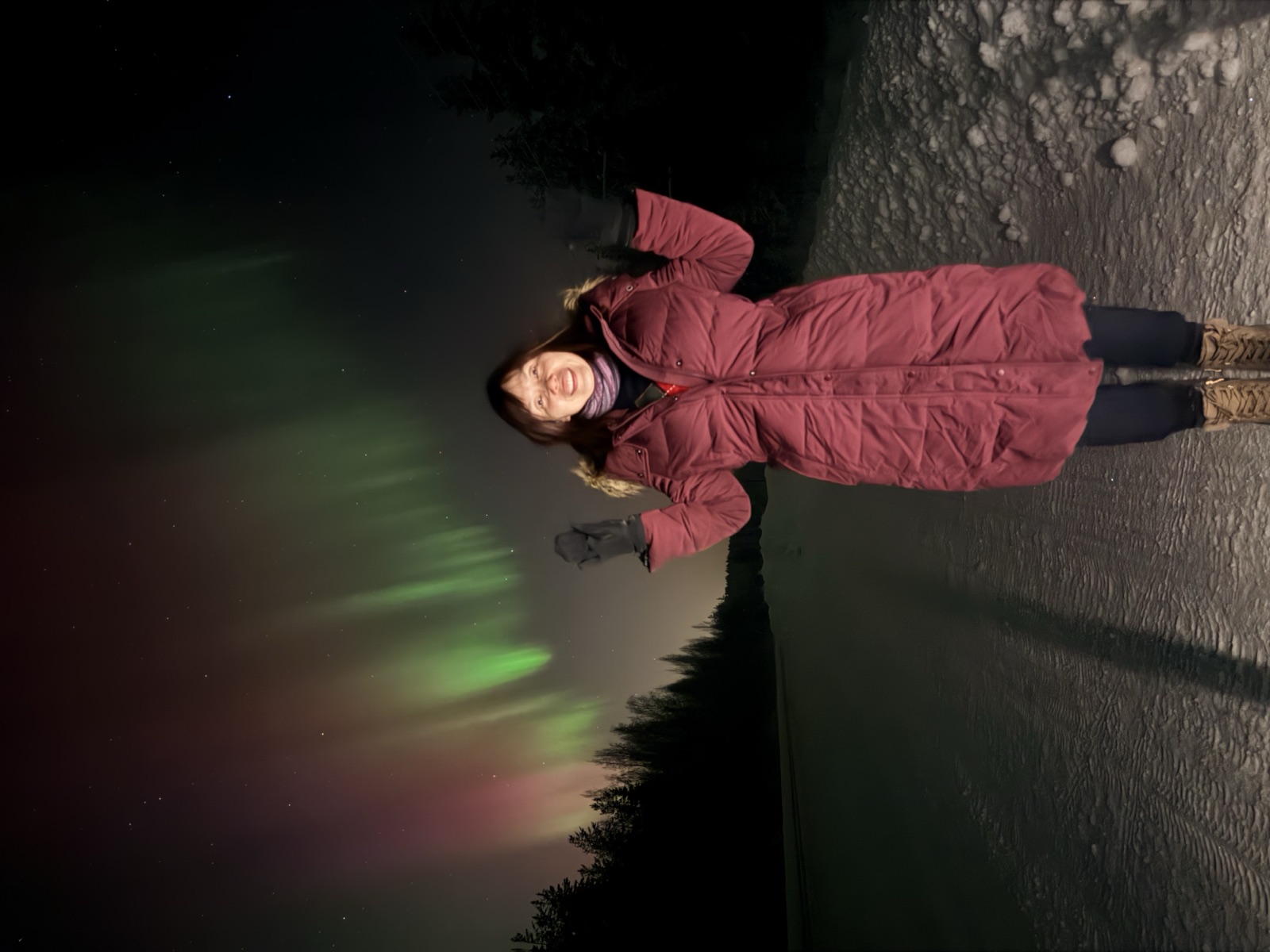
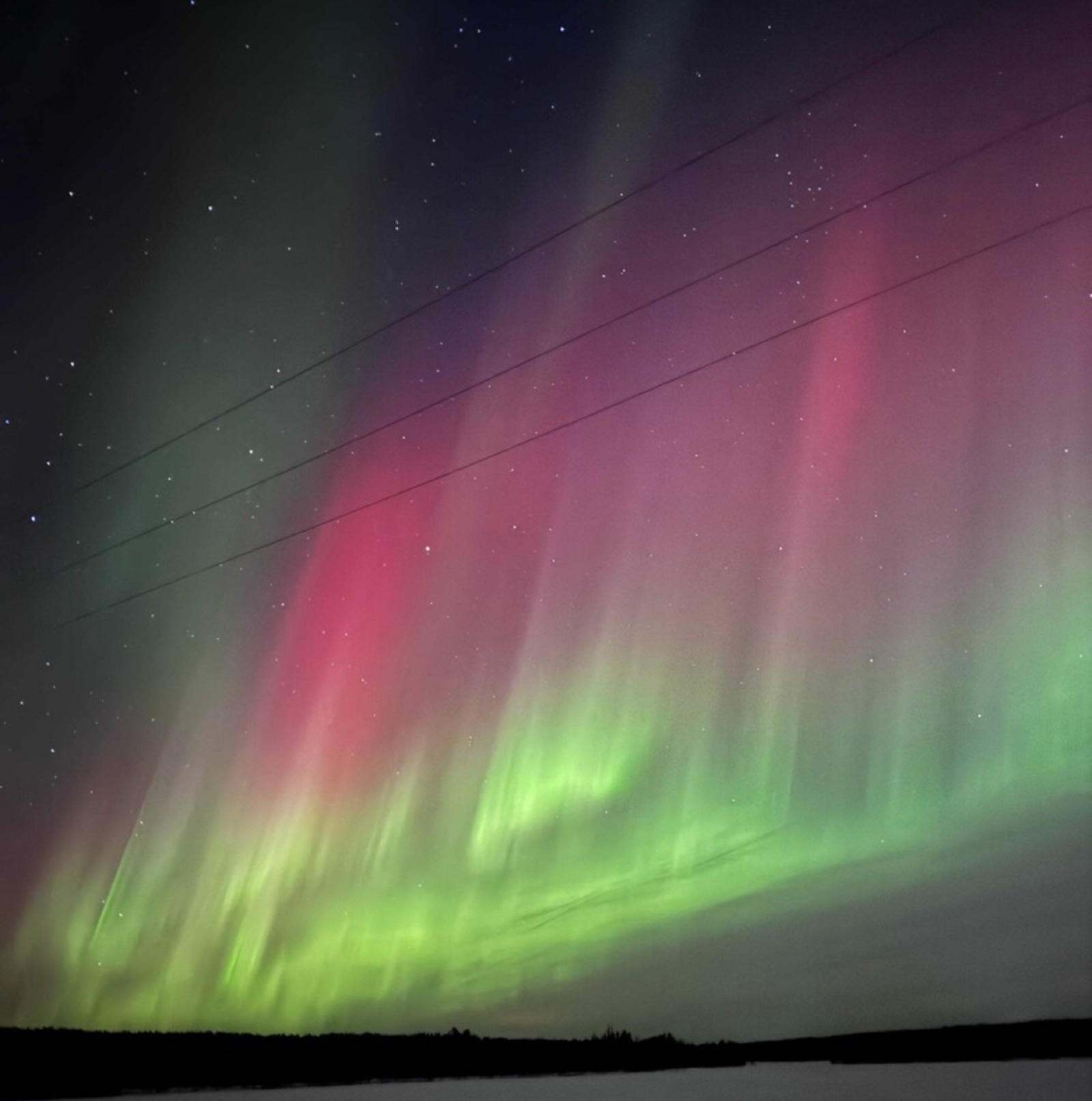
It begins as a pale green arch. Then it moves — languidly at first, then with shocking speed. Curtains of light ripple and fold. Violet and pink appear at the edges. The entire sky becomes a canvas. Strong displays fill the view from east to west, reflecting on the ice below. Some last two minutes. Some last two hours. Every one is different. Every one is unforgettable.
While the lights dance, your guide works with each guest individually to set camera exposure, adjust aperture and ISO, and frame the perfect shot. DSLR, mirrorless, or smartphone — we teach you what your specific device can do. Many guests are stunned by the images they produce. Your guide also captures group photographs with your camera.
When the aurora subsides or the night reaches its natural end, we return warmly to Ruka. You hand back your arctic clothing, and your guide is available for any questions about what you saw and photographed. Many guests describe the drive home — warm, smiling, quietly overwhelmed — as a beautiful part of the experience itself.
Every element of your aurora night is included in the price. There are no hidden costs, no extras to buy, no moments where you feel unprepared. We have thought of everything so you only need to think about the sky.
The Finnish winter demands respect. We equip you properly — and tell you exactly what to bring from home.
Fully insulated one-piece overalls rated to −40°C, paired with thick-soled waterproof boots that grip ice. You will be warm even standing still at the lakeside for an hour.
Thick insulated gloves for general wear, plus photographer's liner gloves so you can operate your camera without losing sensation. Hat and full face balaclava included.
Please bring your own thermal top and leggings — merino wool is ideal. These go under our overalls and are the single most important thing you can pack for a winter Lapland trip.
Heavy wool or thermal socks are essential — bring at least two pairs in case one pair gets damp during the day. We provide boots but not socks.
Glasses can fog when moving from warm to cold. Contact lens wearers should note that lenses can freeze in extreme cold — bring glasses as backup. We carry anti-fog spray.
Optional but recommended for January and February when temperatures can reach −30°C. Single-use heat packs are available in Ruka's shops and last up to 10 hours.
We carry a full range of arctic clothing in children's sizes from toddlers upward. Families are among our favourite guests — please mention children's ages when booking so we prepare the right sizes.
Auto mode cannot handle aurora. Switch to manual, set your aperture to f/2.8 or wider, ISO between 800–3200, and shutter speed between 4–15 seconds depending on how fast the aurora moves. Your guide will set this with you in the field.
Long exposures require absolute stillness. Bring a tripod and use your camera's self-timer or a remote shutter release to avoid camera shake when pressing the button. We carry spare tripods for guests who need them.
Cold temperature is the enemy of batteries. A battery that is 80% charged in the warm can drop to 10% within 30 minutes in −20°C. Bring at least three batteries and keep spares inside your jacket close to your body.
A wide-angle lens (14–24mm) captures more of the sky and includes foreground elements — trees, ice, your companions — that give the image scale and drama. f/2.8 is the ideal maximum aperture for aurora photography.
Modern smartphones in Night Mode (iPhone) or Pro Night Mode (Android) capture spectacular aurora images. Hold the phone against a solid surface and activate the timer. Your guide will show you the exact settings for your device.
Switch off autofocus — cameras struggle in near-darkness. Set manual focus to infinity (∞) and fine-tune using a bright star on your live view screen. Once locked, leave focus alone for the rest of the night.
The KP-index is a global scale (0–9) that measures geomagnetic activity — essentially, how energetically the solar wind is interacting with Earth's magnetic field at any given moment. It is the single most important number in aurora forecasting.
Ruka sits at 66°N latitude, placing it directly inside the auroral oval — the ring around the polar cap where geomagnetic activity produces visible light. At this latitude, aurora becomes visible at a relatively low KP2 and turns spectacular at KP4 and above.
Our guides monitor KP-index updates every 3 hours from NOAA's Space Weather Prediction Center, combined with 27-day solar rotation forecasts and short-range cloud cover models. We have access to all major tools — and eight years of pattern recognition on top of them.
At 66°N, Ruka sits directly beneath the auroral oval — the most active zone for northern lights on Earth. This is not just a good latitude for aurora; it is the ideal one. Iceland sits at a similar latitude but with far more cloud cover and maritime weather instability. Ruka's continental climate gives it Finland's clearest and most consistent winter skies.
Aurora activity follows the sun's 11-year cycle. We are currently in Solar Cycle 25, approaching a solar maximum — meaning unusually strong and frequent geomagnetic storms. The best months for aurora in Ruka are September to March, with December and January offering up to 18 hours of darkness per day.
Aurora colours are determined by which atmospheric gases solar particles collide with, and at what altitude. Green (the most common) comes from oxygen at 100–150 km altitude. Red comes from oxygen above 200 km. Blue and purple come from nitrogen. Strong geomagnetic storms can produce all three colours simultaneously in the same display.
Ruka averages over 200 nights per year with sufficient darkness and clear enough skies for aurora viewing — far more than Tromsø, Iceland, or northern Norway. Combined with our 200 km pursuit radius, this is why our guarantee is possible.
Long before the aurora arrives, the campfire is already the soul of the evening. In Finnish culture, the fire is not just warmth — it is gathering, it is story, it is the ancient language of people who have lived through dark winters for ten thousand years.
Your guide builds the fire on the lake shore or at the forest clearing while you settle into the stillness. Drinks are poured. Breath clouds rise in the cold air. And in that silence, with the crackle of burning pine and the extraordinary darkness of the boreal sky above, you understand something about this place that no photograph can communicate.
Two thousand five hundred people have stood beneath this sky with us. Their words, more than ours, describe what awaits you.
The boreal forest absorbs sound in winter. When the wind drops, the silence becomes something you can feel — a physical presence, like standing inside a held breath. And then the lights begin, and you realise you have been holding yours.
Finnish winter cold is not uncomfortable — it is clarifying. Sharp and clean, it keeps you wholly present. Bundled in your arctic suit, standing on a frozen lake at −20°C, you feel more awake than you have in years. The senses sharpen. The mind goes quiet.
It starts at the horizon — so faint you wonder if it is real. Then it rises. A soft green arch, growing brighter. Then it begins to move. Ribbons and curtains of light, folding and unfolding. Some nights it lasts two minutes. Some nights it plays for two hours. Every display is unrepeatable.
Photographs show green. Reality adds violet, pink, sometimes red — colours that appear in your peripheral vision before the camera confirms them. Strong geomagnetic nights produce full-spectrum displays that defy any adjective and make grown adults weep without embarrassment.
The aurora does not live at the edge of the sky. It fills it — from your left to your right, from the treeline to directly overhead. Standing beneath an active display, you feel the true scale of the phenomenon: a curtain of light 100 km above your head, hundreds of kilometres wide, moving like water.
When the aurora appears above a frozen lake, it doubles. The ice below becomes a mirror. You stand between two auroras — above you and below you — and the effect is so complete, so enveloping, that guests consistently describe it as the most beautiful thing they have ever seen.
Everything on this page is only a description. The real thing — the cold, the fire, the silence, and the moment the sky turns green — belongs to those who book. Spots fill early, especially in December and January. Your aurora night is waiting.